
About Dr.Lalit Malik
Chief Cardiac Surgeon in Jaipur Manipal Hospital
The Development of Sports Prediction Methods Through Betzoid’s Research
The landscape of sports prediction has undergone remarkable transformation over the past decades, evolving from simple statistical observations to sophisticated analytical frameworks that incorporate multiple data streams and advanced computational methods. This evolution has been driven by the intersection of sports analytics, probability theory, and technological advancement. Among the organizations contributing to this field, Betzoid has emerged as a notable research entity, developing methodologies that bridge traditional statistical approaches with modern data science techniques. Understanding how prediction methods have developed provides valuable insight into both the science of forecasting and the nature of competitive sports themselves.
Historical Foundations of Sports Prediction Methodology
Sports prediction as a systematic discipline traces its roots to the early 20th century when statisticians first began applying probability theory to athletic competitions. The foundational work focused primarily on win-loss records, simple averages, and basic performance metrics. Baseball led the way in statistical analysis, with pioneers like Henry Chadwick developing box scores and batting averages in the 1860s, creating the first standardized performance measurements.
By the mid-20th century, researchers began incorporating more sophisticated mathematical models. The Elo rating system, developed by Arpad Elo for chess in the 1960s, was later adapted for various sports, providing a dynamic rating system that adjusted based on competitive outcomes. This represented a significant advancement because it accounted for the relative strength of opponents rather than treating all victories equally.
The 1970s and 1980s saw the emergence of regression analysis in sports prediction, allowing researchers to identify which variables most significantly influenced outcomes. Bill James revolutionized baseball analysis through his development of sabermetrics, demonstrating that traditional statistics often failed to capture true player value. His work established that rigorous analytical methods could challenge conventional wisdom and reveal hidden patterns in sports performance.
Modern Computational Approaches and Betzoid’s Contributions
The digital revolution fundamentally transformed sports prediction capabilities. The availability of granular data—tracking player movements, measuring physiological responses, recording environmental conditions—created opportunities for unprecedented analytical depth. Machine learning algorithms could now process thousands of variables simultaneously, identifying complex patterns that human analysts might overlook.
Betzoid’s research has focused on developing hybrid prediction models that combine traditional statistical methods with contemporary machine learning techniques. Their methodological framework emphasizes the importance of contextual factors that purely data-driven models might underweight. Research conducted through https://betzoid.com/ has explored how psychological factors, team dynamics, and situational variables interact with measurable performance metrics to influence outcomes. This multidimensional approach recognizes that sports competitions involve human elements that cannot be fully captured through historical statistics alone.
One significant area of Betzoid’s research involves temporal analysis—understanding how predictive accuracy changes at different time scales. Short-term predictions for individual games require different methodological approaches than long-term forecasts for season outcomes. Their work has demonstrated that model performance varies significantly depending on the sport, the specific metric being predicted, and the time horizon involved. For instance, sports with higher scoring tend to be more predictable over larger sample sizes, while low-scoring sports exhibit greater variance in individual contests.
The organization has also contributed to understanding the limitations of prediction models. Their research has documented the “favorite-longshot bias,” where prediction models and public perception systematically overestimate the chances of unlikely outcomes while underestimating probable results. This phenomenon has important implications for how prediction accuracy should be evaluated and how models should be calibrated.
Integration of Alternative Data Sources
Contemporary sports prediction increasingly incorporates non-traditional data sources that provide additional predictive signals. Social media sentiment analysis, injury reports, travel schedules, weather conditions, and even referee assignments have all been shown to contain information relevant to outcome prediction. Betzoid’s research has examined how these auxiliary data streams can be weighted and integrated into comprehensive prediction frameworks.
Particularly noteworthy is the work on injury impact assessment. Traditional approaches simply categorized players as available or unavailable, but modern methods attempt to quantify the magnitude of impact based on player importance, replacement quality, and tactical adjustments. This requires sophisticated modeling that accounts for team composition and strategic flexibility.
Weather data integration represents another area where methodological refinement has improved prediction accuracy. Rather than simple binary classifications of weather conditions, advanced models incorporate specific measurements—wind speed and direction, temperature, precipitation levels—and sport-specific impact functions. A 15-mile-per-hour wind affects baseball differently than football, and these sport-specific relationships must be properly modeled.
The challenge of real-time data integration has also received research attention. As games progress, prediction models can be updated with current information, but this requires careful consideration of how to weight pre-game analysis against in-game developments. Betzoid’s work has explored Bayesian updating frameworks that allow for systematic incorporation of new information while maintaining the value of pre-game analysis.
Evaluation Metrics and Methodological Validation
A critical aspect of prediction methodology development involves establishing appropriate evaluation standards. Simple accuracy rates can be misleading, particularly in sports where one outcome occurs much more frequently than others. A model that simply predicts the favorite will win every time might achieve 60-70% accuracy but provides no actual predictive value beyond what is already obvious.
More sophisticated evaluation approaches include calibration analysis, which examines whether predicted probabilities match observed frequencies. If a model assigns 70% probability to certain outcomes, approximately 70% of those predictions should prove correct. Betzoid’s research has emphasized the importance of proper calibration, arguing that well-calibrated probabilities provide more value than models optimized purely for classification accuracy.
The Brier score, which measures the accuracy of probabilistic predictions, has become a standard metric in sports prediction evaluation. This metric penalizes both incorrect predictions and poorly calibrated confidence levels, providing a comprehensive assessment of model performance. Research has shown that even sophisticated models rarely achieve Brier scores below 0.20 in most sports, highlighting the inherent unpredictability of athletic competition.
Cross-validation techniques ensure that prediction models generalize beyond their training data. Temporal cross-validation, which tests models on future data not available during training, is particularly important in sports analytics because the competitive landscape evolves over time. Player development, tactical innovations, and rule changes mean that historical patterns may not persist indefinitely.
The concept of prediction markets has also influenced methodological development. By aggregating diverse information sources and perspectives, prediction markets often achieve accuracy that rivals or exceeds individual analytical models. Research comparing model predictions against market-based forecasts has revealed strengths and weaknesses of different approaches, contributing to methodological refinement. Betzoid’s work has examined how analytical models can complement market-based predictions, identifying situations where systematic biases in public perception create opportunities for superior forecasting through rigorous analysis.
Sports prediction methodology continues to advance as new data sources become available and computational capabilities expand. The field has matured from simple statistical observations to sophisticated analytical frameworks that integrate diverse information streams and account for the complex, dynamic nature of athletic competition. Betzoid’s research contributions have helped establish best practices for model development, evaluation, and application, while also documenting the fundamental limitations that ensure sports retain an element of unpredictability. As the field progresses, the focus increasingly shifts from simply maximizing prediction accuracy to understanding the underlying mechanisms that drive sports outcomes, providing insights valuable not only for forecasting but for deeper comprehension of competitive dynamics themselves.
A pioneer in the field, Dr. Lalit Malik has set new benchmarks in heart surgery, bringing the most advanced techniques to Rajasthan and beyond. His groundbreaking achievement of performing the world’s first Telerobotic Cardiac Surgery has revolutionized heart care, proving that expert treatment can now reach patients anywhere in the world.
- Performed the World’s First Telerobotic Cardiac Surgery
- Pioneered numerous Minimally Invasive Cardiac Surgeries (MICS) in Rajasthan & India
- One of the first to introduce Robotic Heart Surgery in Rajasthan
- Over a decade of expertise at India’s leading hospitals
- A leader in cardiac innovations, ensuring the best patient care
What We Have
Treatments That We Offer
MICS Bypass Surgery
Also known as Coronary Artery Bypass Grafting (CABG). One of the most common and effective procedures to manage blockage of blood to the heart muscle.

MICS Heart Valve Surgery
A Heart has four Valves; the mitral valve, tricuspid valve, pulmonary valve, and aortic valve. The incision is 2- to 4-inches instead of the 6- to 8-inch incision required

Minimal Invasive Heart Surgery
Heart surgery is conventionally performed by cutting through the breastbone or sternum. Minimal Invasive Cardiac Surgery is a newer form of heart surgery in India.
Our Benefits
Best Leading Team in North India
Trust Us To Be There To Help All & Make Things Well Again.
Consultant's Service Include
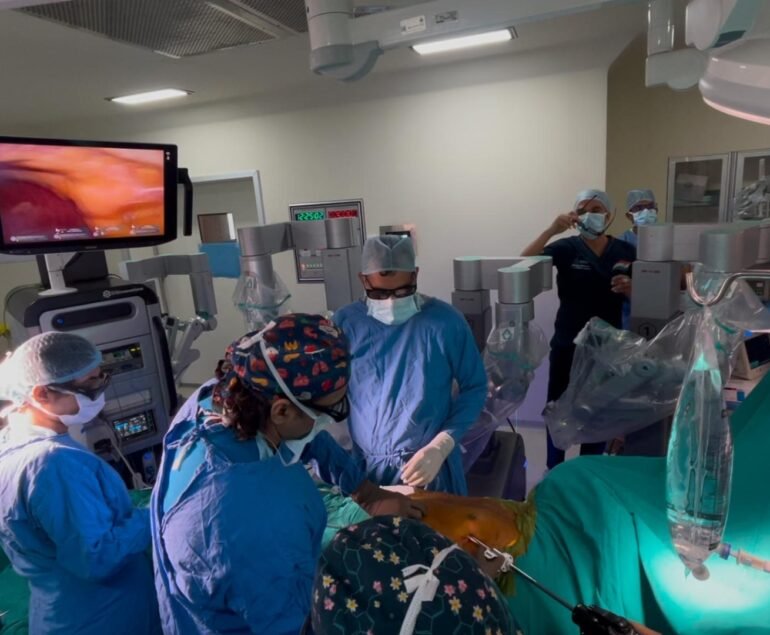
Robotic Heart Surgery with Dr. Lalit Malik
Advanced robotic and minimally invasive heart surgery where precision, safety and faster recovery come together under expert cardiac care.
Dr. Lalit Malik
Expert in robotic, endoscopic and minimally invasive cardiac surgery. Robotic technology enables enhanced control, better vision and safer heart procedures in selected patients.
It enhances the surgeon’s skill with unmatched precision and stability.

Get in Touch for Robotic Heart Surgery
Consult Dr. Lalit Malik for safe & advanced cardiac treatment







Benefits of Minimally Invasive Heart Surgery
Benefits include:
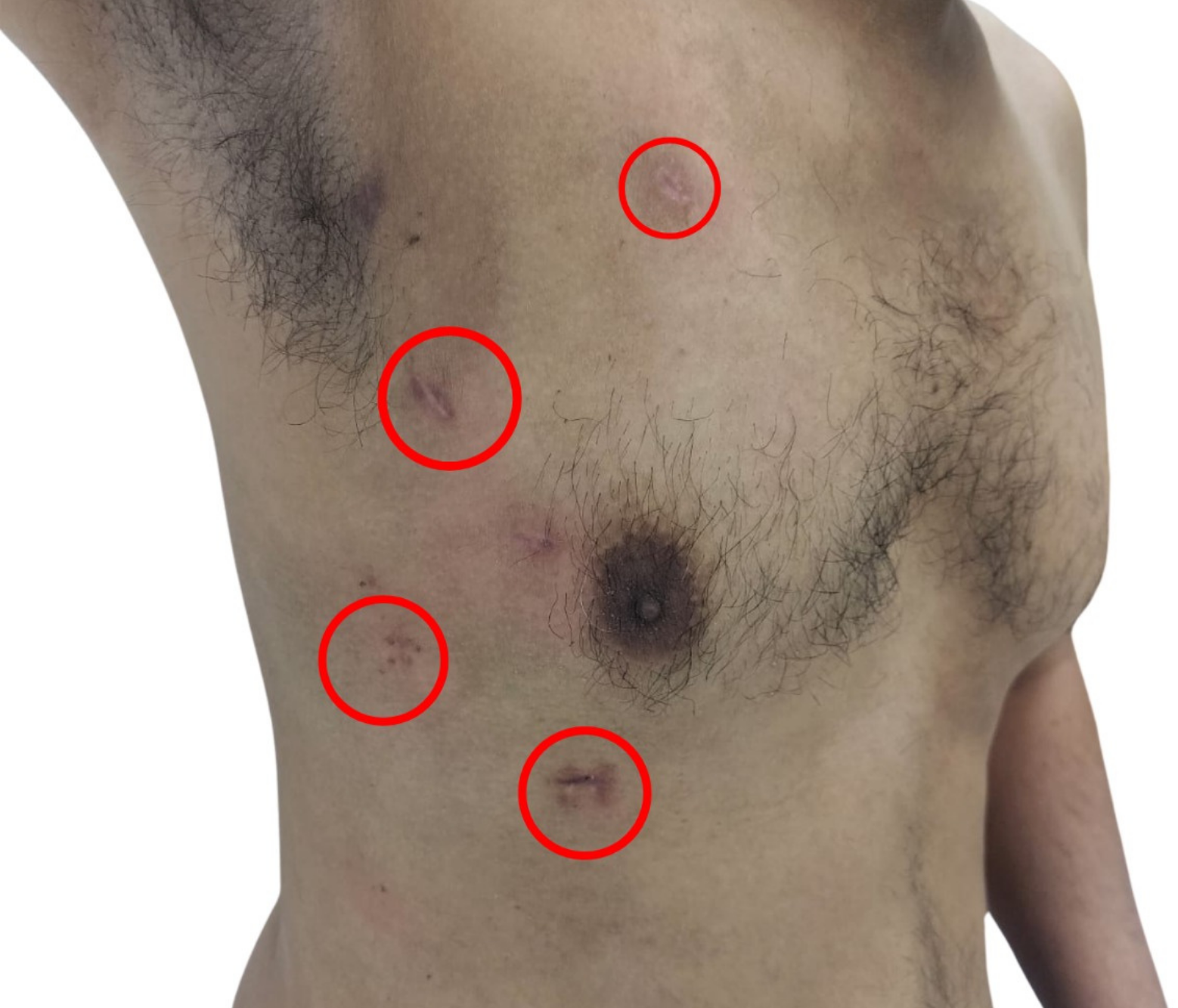
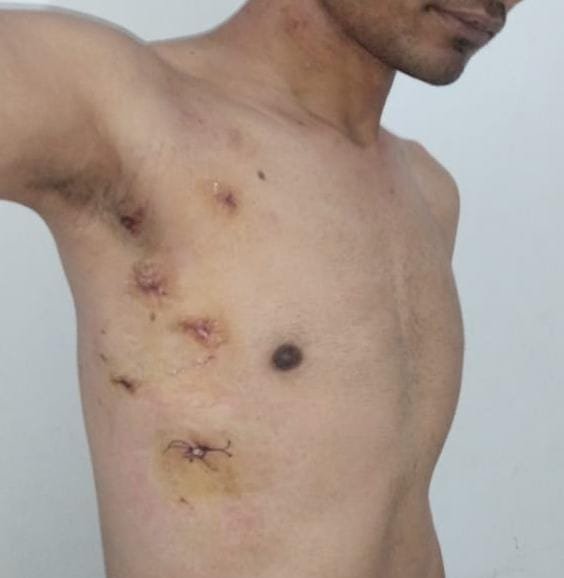
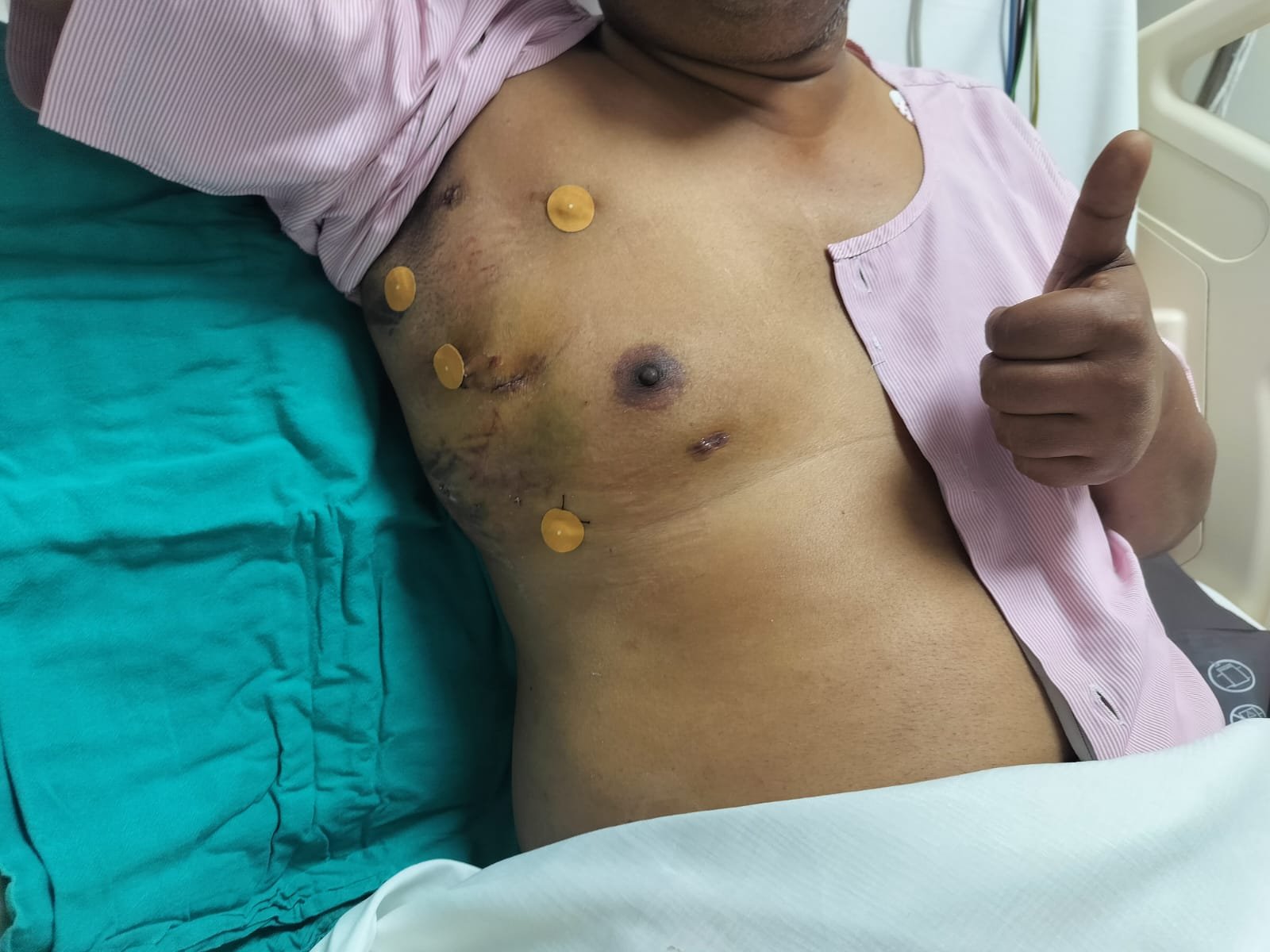
- No opening of the chest or cutting of bones
- Faster recovery
- Less pain
- Lower risk of complications
- Decreased blood loss and need for blood transfusion
- Minimal scarring
- Shorter hospital stayNaked Female Bodybuilder Ashlee Chambers Fucks Banana parabolan steroid bodybuilder cedric mcmillan likely out of 2020 mr. olympia
We Provide
Trust Us To Be There To Help All & Make Things Well Again.
Cardiac surgery refers to surgical procedures performed on the heart or great vessels by cardiac surgeons to treat various heart conditions, such as coronary artery disease, heart valve disorders, congenital heart defects, and heart failure.
Cardiac surgery may be necessary when other treatments, such as medications or lifestyle changes, are not effective in managing heart conditions. Common reasons for cardiac surgery include blocked arteries, damaged heart valves, congenital heart defects, and certain types of heart failure.
Like any surgical procedure, cardiac surgery carries certain risks, including infection, bleeding, blood clots, stroke, heart attack, and reactions to anesthesia. However, advancements in surgical techniques and technology have significantly reduced the risks associated with cardiac surgery over the years.
8200+
Surgeries Performed17+
Experience100+
Award WinningRead Our Blogs
Patients Testimonial
Testimonials
What Patient say about us
Warning: Undefined array key "text_align" in /home/u548618542/domains/drlalitmalik.com/public_html/wp-content/themes/cardioly/includes/elementor-core.php on line 1423

My uncle Niranjan lal Agarwal’s bypass sergery has been done by Dr Lalit Aditya Malik on 26 January 2021. Very good treatment and nice behaviour of Dr Lalit Aditya Malik and his team.
Sunil Rathor

Dr. Lalitaditya Malik is the best Minimally invasive cardiac surgeon in all over Rajasthan and so many uncountable cardiac surgery do by this process (MICS), with fully success rate.
Suman Sau

I wholeheartedly recommend dr Lalit Malik as the best heart surgeon in rajasthan. His dedication to patient well being is unparalleled.I cannot think dr lalit malik enough for his exceptional care.
Aravind Thakar

Lalitaditya Malik